Trump Escalates Attacks on Fed Chair, Threatens Lawsuit Over Renovation Costs and Floats Potential Firing
President Donald Trump unleashed a fresh barrage of criticism against Federal Reserve Chair Jerome Powell during a Mar-a-Lago press conference on Monday, January 5, 2026, labeling him a “fool” exhibiting “gross incompetence” and threatening legal action over the central bank’s headquarters renovation project.
Standing alongside Israeli Prime Minister Benjamin Netanyahu, Trump contrasted the Fed’s alleged mismanagement with his own White House ballroom construction, claiming the latter is “under budget and ahead of schedule.”
The president’s remarks—coming amid ongoing pressure for deeper interest rate cuts and speculation over Powell’s successor—highlight persistent tensions between the White House and the independent central bank, raising fresh questions about Fed autonomy, monetary policy direction, and the potential for unprecedented political interference as Powell’s chairmanship approaches its May 2026 expiration.
Trump’s Multifaceted Critique: From Rates to Renovations
Trump’s latest broadside revived familiar grievances while introducing new escalations. He accused Powell of chronic tardiness in adjusting interest rates—”always too late”—except, Trump claimed, for pre-election cuts timed to aid Democrats (a charge Powell and economists dispute as data-driven). The president mocked Powell as “‘Too late’ Powell,” asserting delays fueled inflation that “did the most harm to the hardest-working Americans.”
Shifting to fiscal oversight, Trump fixated on the Federal Reserve’s long-planned renovation of its Eccles Building headquarters and adjacent structures in Washington, D.C. He alleged costs ballooned to “more than $4 billion”—the “highest price of construction per square foot in the history of the world”—blaming Democrats and Powell’s incompetence. Trump defended his own White House ballroom project, noting historical desire for such a venue spanning “150 years.”
The president floated suing Powell personally for mismanagement, stating: “We’re thinking of bringing a suit against Powell for incompetence.” He reiterated calls for resignation, saying it “would be a favor to the nation,” and mused about firing him despite proximity to term end: “I would love to fire him, but we’re so close… maybe I still might.”
These threats echo prior rhetoric—last month alleging Powell has “mental problems” and vowing to “fire his ass”—yet carry heightened weight amid active successor searches.
The Renovation Project: Costs, Context, and Controversies
The Fed’s headquarters modernization, initiated years ago to address aging infrastructure, asbestos, lead, and accessibility issues, has indeed seen significant cost increases. Initial 2019 estimates pegged the Eccles Building work at approximately $1.9 billion. By 2025, revised figures approached $2.5 billion, attributed to post-pandemic surges in materials like wood, steel, and cement, plus remediation expenses.
Trump’s “$4 billion” claim appears inflated, potentially conflating the ongoing Eccles project with the completed renovation of the adjacent Marriner S. Eccles and Martin buildings (the latter reopened in 2021 after separate upgrades). Wall Street Journal reporting and Fed disclosures align closer to the $2.5 billion range for current phases.
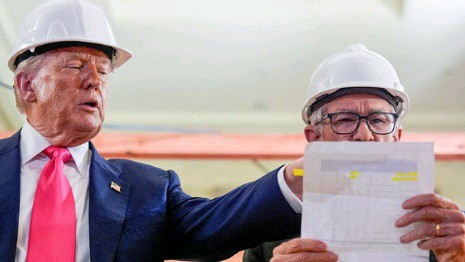
In August 2025, Trump and allies toured the site with Powell, leading to tense exchanges where the president presented documents claiming $3.1 billion totals—figures Powell clarified included prior completed work.
Critics argue renovations are necessary for safety and functionality; defenders, including Trump, view overruns as emblematic of bureaucratic waste.
Powell’s Position: Independence and Term Commitment
Jerome Powell, first appointed Fed chair by Trump in 2017 and reappointed by President Biden in 2021, has steadfastly maintained he will serve his full term ending May 2026. His underlying governorship extends to January 2028, providing continuity even post-chairmanship.
Powell has repeatedly affirmed the Fed’s independence, stating unlawful removal attempts would fail legally—presidents may only dismiss for “cause,” not policy disagreements, per statute and precedent. He has navigated Trump’s criticisms professionally, focusing communications on data-driven decisions amid cooling inflation and resilient growth.
Recent Fed actions—three 0.25-point cuts in 2025—reflect gradual easing without aggressive front-loading Trump demands.
Why It Matters
Trump’s rhetoric tests foundational norms of central bank autonomy, established to insulate monetary policy from short-term political pressures that could fuel inflation or instability. Escalating threats—lawsuits, firings—risk eroding global confidence in the dollar and Fed credibility, potentially elevating borrowing costs or market volatility.
Legal viability of suing Powell personally appears slim: Sovereign immunity and official-act protections likely shield him absent clear malfeasance. Firing requires “cause” beyond disagreement—courts historically defer but could intervene if perceived as pretextual.
Policy-wise, pressure for rapid cuts aligns with Trump’s growth focus but contrasts Fed caution over labor softening without recession signals. Premature easing risks reaccelerating inflation; delay prolongs high borrowing costs burdening consumers and businesses.
Renovation criticism, while politically potent, overlooks necessities in century-old structures and broader construction inflation trends post-pandemic.
Broader context: Trump’s successor search (shortlist including Hassett, Warsh, Rieder, Waller) suggests preference for accommodative voices, potentially shifting toward looser policy post-Powell.
Critically, while politically incorrect to some, evidence supports Trump’s inflation-harm claims on lower-income households, though economists attribute surges more to supply shocks and stimulus than Fed timing alone.
What People Are Saying
Financial markets exhibited mild volatility post-remarks, with bond yields ticking up on independence concerns. Economists warned sustained attacks could undermine long-term credibility.
Supporters praised Trump’s accountability push; critics decried erosion of institutional norms. Media highlighted Netanyahu’s presence, noting international leaders witnessing domestic economic spats.
Powell has not responded directly, consistent with tradition.
With Powell’s chairmanship nearing end, January successor announcement looms, followed by Senate confirmation. Outcome shapes 2026-2030 policy—balancing growth support against inflation vigilance.
HAPPENING NOW
- Trump’s Fed Chair Shortlist Narrows to Four as He Vows January Decision Amid Ongoing Powell Criticism
- Bill Ackman Slams California’s Proposed Billionaire Wealth Tax as ‘Expropriation,’ Warns of Economic Self-Destruction
- Judge Pulls Plug on Criminal Trial for Abrego Garcia, Grants Feds One Last Chance
Legal threats remain rhetorical for now, but escalation could prompt constitutional confrontations.
The episode encapsulates Trump’s disruptive style: Leveraging bully pulpit to influence independent bodies, risking short-term gains against long-term institutional costs.
As global economies navigate uncertainties—trade tensions, energy shifts, demographic pressures—the Fed’s steadfastness versus political winds will profoundly impact American prosperity. How do you assess the balance between presidential oversight and central bank independence?


