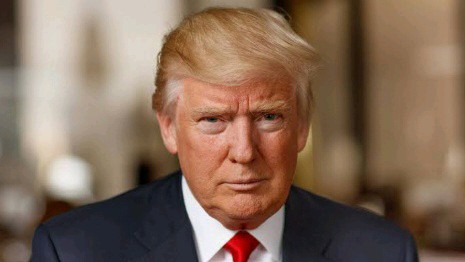
Trump’s Fed Chair Shortlist Narrows to Four as He Vows January Decision Amid Ongoing Powell Criticism
President Donald Trump has intensified speculation about the future leadership of the Federal Reserve, announcing ahead of the New Year’s holiday that he intends to make a final decision on Jerome Powell’s successor by the end of January 2026.
With Powell’s term as chair set to expire in May 2026—and the current Fed chief repeatedly affirming his commitment to serve out his full obligation—the president’s timeline signals an early and potentially disruptive transition at one of the world’s most influential economic institutions.
Trump’s persistent public attacks on Powell, whom he has labeled “too late,” “a fool,” and criticized over headquarters renovation overruns, have fueled uncertainty in financial markets already navigating inflation cooldowns, labor market softening, and geopolitical risks.
As Treasury Secretary Scott Bessent reportedly narrows the field to four contenders, the potential nominees bring diverse backgrounds—from White House economic advising and Fed governorship to private-sector asset management—each with implications for monetary policy, interest rates, and the central bank’s independence.
Jerome Powell: A Chair Under Fire Yet Committed to His Term
Jerome Powell, appointed Fed chair by Trump in 2018 and reappointed by President Biden in 2022, has navigated one of the most turbulent periods in modern central banking history. Leading the aggressive rate-hiking campaign to combat post-pandemic inflation peaking near 9%, Powell later orchestrated a pivot to cuts in 2024 and 2025 as price pressures eased.
The Fed delivered three quarter-point reductions in 2025, bringing the federal funds rate to a range reflecting cooling but resilient growth.
Despite these efforts, Trump has renewed verbal assaults, accusing Powell of acting “too late” on cuts—contributing to unnecessary economic pain—and mocking cost overruns in the Fed’s Washington headquarters renovation. Powell has remained stoic, repeatedly stating he will complete his term through May 2026, emphasizing the importance of institutional independence.
Market participants watch closely: An early replacement could signal policy shifts toward easier money or political influence, potentially unsettling bond yields, dollar strength, and investor confidence.
The Narrowing Shortlist: Four Contenders with Distinct Profiles
According to Treasury Secretary Scott Bessent—a key economic advisor instrumental in vetting candidates—the field has condensed to four individuals, blending White House insiders, Fed veterans, and private-sector heavyweights. Each brings unique perspectives on inflation, growth, employment, and the Fed’s dual mandate.
Kevin Hassett emerges as a leading contender, currently serving as director of the National Economic Council in Trump’s second administration. A veteran of the first Trump term as chairman of the Council of Economic Advisors, Hassett has deep experience coordinating White House economic strategy.
Following third-quarter 2025 GDP growth of 4.3%, he claimed credit for administration policies, declaring on FOX Business that “Trump policies are working, and they are very visibly working because we have seen the data.” His proximity to the president and alignment with growth-focused agendas position him as a potential chair favoring accommodative policy to sustain expansion.
Kevin Warsh, a former Federal Reserve governor from 2006 to 2011, represents institutional experience with a critical edge.
Long vocal about the Fed’s forecasting shortcomings, Warsh has argued the central bank underestimated both growth potential under pro-business policies and inflation risks, leading to delayed responses harming working Americans.
Appearing recently on “Maria Bartiromo’s Wall Street,” he emphasized track records matter, suggesting openness to more proactive adjustments.
Rick Rieder, chief investment officer of global fixed income at BlackRock—the world’s largest asset manager overseeing $10+ trillion—brings private-sector sophistication. Managing $3.2 trillion in fixed-income assets personally, Rieder has navigated bond markets through crises and rate cycles.
When previously asked about Fed interest on FOX Business, he described it as “the greatest honor” and highlighted monetary policy’s power to “help people through economic transmission.” His market-savvy approach could prioritize financial stability and investor signals.
Christopher Waller, a current Federal Reserve governor appointed in 2020, offers continuity with dissent. Alongside Michelle Bowman, Waller was among early voices advocating rate cuts in mid-2025, signaling internal divides as inflation lingered and labor cooled.
Supporting December’s 0.25-point reduction—the year’s third—he embodies data-dependent pragmatism amid uncertain 2026 projections revealed in recent minutes.
Why It Matters
Trump’s accelerated timeline and public Powell criticism revive debates over Fed independence—a cornerstone since the 1951 Treasury-Fed Accord shielding monetary decisions from short-term politics. Early replacement risks signaling politicization, potentially eroding credibility and complicating inflation anchoring.
Candidate profiles suggest directions: Hassett might prioritize growth via lower rates; Warsh critique past caution; Rieder integrate market feedback; Waller maintain institutional evolution. Common threads include skepticism of prolonged tight policy, aligning with Trump’s preference for cheaper borrowing to fuel expansion.
Markets react sensitively: Rate-cut expectations for 2026 remain fluid per December minutes, with participants pricing political variables. Dovish appointees could steepen yield curves; independence defenders stabilize long-term confidence.
Critically, Senate confirmation requires 51 votes—feasible with Republican control but vulnerable to moderate holdouts valuing autonomy. Historical precedents (Powell’s bipartisan reappointment) contrast Trump’s prior regrets over Powell.
Broader context includes cooling inflation, resilient yet softening labor (recent job adds below expectations), and external risks (geopolitics, trade policies). Chair choice influences pace of normalization—balancing recession avoidance against reacceleration.
What People Are Saying
Financial commentators express mixed views: Some welcome fresh perspectives post-crisis era; others warn against perceived interference undermining dollar reserve status. Economists note Trump’s first-term growth coincided with Powell’s initial accommodation before pandemic disruption.
Bessent’s vetting role reassures process rigor, though presidential prerogative dominates.
HAPPENING NOW
- Bill Ackman Slams California’s Proposed Billionaire Wealth Tax as ‘Expropriation,’ Warns of Economic Self-Destruction
- Elon Musk Mocks Waymo After San Francisco Blackout Exposes Self-Driving Vulnerabilities in Traffic Chaos
- Elon Musk: The Future Belongs to Robots
With Trump pledging a January decision, markets brace for clarity—or volatility—early in the year. Confirmation hearings could spotlight candidates’ independence commitments versus administration alignment.
Powell’s term completion provides continuity buffer, but vice chair or governor shifts might preview direction.
The selection will shape monetary policy through potential recession risks, election aftermath, and global uncertainties—profoundly impacting borrowing costs, investment, employment, and everyday Americans’ finances.
As speculation mounts, the Fed chair race embodies tensions between political accountability and technocratic insulation in modern governance. Who do you believe would best steer the economy forward?


