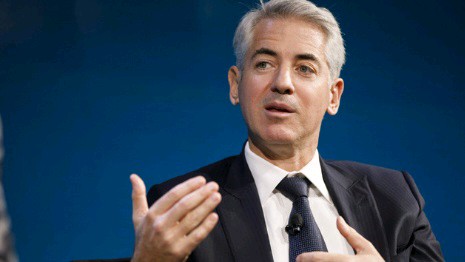
Bill Ackman Slams California’s Proposed Billionaire Wealth Tax as ‘Expropriation,’ Warns of Economic Self-Destruction
Billionaire hedge fund manager Bill Ackman has launched a scathing attack on a proposed California ballot measure that would impose a one-time 5% wealth tax on residents with assets exceeding $1 billion, calling it an “expropriation of private property” with disastrous unintended consequences.
In a series of posts on X earlier this week, Ackman, founder of Pershing Square Capital Management and a vocal commentator on economic policy, argued that wealth taxes have historically failed wherever implemented and would accelerate an exodus of high-net-worth individuals from the Golden State.
His criticism comes amid reports that tech titans like Peter Thiel and Larry Page are considering relocating if the measure advances, highlighting broader concerns about California’s fiscal direction and competitiveness in attracting talent and capital.
The Proposed Measure: A Retroactive Tax on Extreme Wealth
The initiative, currently gathering signatures for potential placement on the November 2026 ballot, would levy a one-time 5% tax on the net worth of California residents exceeding $1 billion as of January 1, 2026. For someone with $20 billion in assets, this translates to a $1 billion liability, payable over five years.
Proponents, backed by groups including the Service Employees International Union–United Healthcare Workers West, frame it as a targeted revenue boost to offset anticipated federal cuts to health care and social programs, potentially generating billions without broadly raising income taxes.
Supporters argue the tax affects an ultra-narrow slice of the population—fewer than 100 individuals—and could provide stable funding for critical services amid volatile state budgets. The retroactive element ensures it captures wealth accumulated before enactment, preventing preemptive asset shifts.
California faces a projected $18 billion deficit for fiscal year 2026-27, according to the Legislative Analyst’s Office, exacerbating pressures from high spending commitments and reliance on volatile capital gains taxes from wealthy residents.
Ackman’s Fierce Opposition: Historical Failures and Unintended Consequences
Ackman, whose net worth exceeds $4 billion and who resides outside California, nevertheless weighed in forcefully, declaring unequivocal opposition to wealth taxes on principle.
“They effectively represent an expropriation of private property and have many unintended and negative consequences that have occurred in every country that has launched such a tax,” he posted.
He dismissed revenue shortfalls as the root issue, asserting instead: “With respect to California’s budget problem, the issue is not a lack of tax revenues. The problem is how the money is being spent.” Ackman pointed to California’s already high income tax rates—topping 13.3%—and substantial overall collections, suggesting fiscal discipline rather than new levies on accumulated wealth.
Days earlier, Ackman warned that “California is on a path to self-destruction,” reacting to New York Times reports that billionaires including Peter Thiel and Larry Page were exploring relocation options should the measure proceed. He predicted cascading damage: “Hollywood is already toast and now the most productive entrepreneurs will leave taking their tax revenues and job creation elsewhere.”
Ackman’s critique extended to political leadership, sarcastically noting Democrats’ praise for Governor Gavin Newsom amid perceived mismanagement.
A Preferred Alternative: Closing the Stock-Loan Loophole
While rejecting broad wealth taxes, Ackman endorsed a more targeted reform: Eliminating the ability of ultra-wealthy individuals to defer taxes indefinitely by borrowing against appreciated stock rather than selling it. This “buy, borrow, die” strategy allows billionaires to fund lavish lifestyles tax-free, with loans repaid via stepped-up basis at death.
Ackman proposed taxing large personal loans exceeding original investment cost as capital gains events, stating: “One shouldn’t be able to live and spend like a billionaire and pay no tax.” He described this as a “simple fix” closing a legitimate loophole without punishing wealth creation through confiscatory measures.
Fellow billionaire Mark Cuban signaled agreement by reposting Ackman’s thread with a concise “Agree.”
Governor Gavin Newsom, a Democrat often eyed for national ambitions, publicly opposed the proposal last month, cautioning against alarmism while acknowledging potential economic risks. His stance aligns with moderate Democrats wary of driving away high earners, whose capital gains taxes comprise a disproportionate share of state revenue—often over 10% from the top 0.1%.
California’s budget volatility stems partly from this concentration: Booms yield surpluses, busts deep deficits. Recent years saw massive swings, with pandemic-era windfalls funding expansive programs now straining finances amid slower growth.
Why It Matters
Ackman’s historical reference holds weight: Wealth taxes in countries like France, Spain, and Norway have often underperformed expectations, yielding modest revenue while prompting capital flight. France’s former tax drove thousands of millionaires abroad before repeal in 2017; similar patterns emerged elsewhere, with administrative complexity and valuation disputes compounding issues.
California’s proposal, though one-time rather than annual, risks similar dynamics—billionaires relocating domiciles (often straightforward for mobile assets) to low-tax states like Florida, Texas, or Nevada. The retroactive feature might deter future wealth accumulation or investment in the state.
Economically, high earners already contribute outsized shares: California’s top 1% pay nearly half of income taxes. Exodus could exacerbate deficits, forcing broader hikes or cuts affecting middle-class services.
Ackman’s loophole fix targets a genuine inequity—unrealized gains effectively untaxed indefinitely—without broad confiscation. Bipartisan interest exists federally, though implementation challenges valuation and loan classification.
Politically, the measure tests progressive priorities: Symbolic justice versus pragmatic retention of economic engines. Passage could energize left-leaning activism; defeat signal limits to redistribution amid mobility.
Ackman’s posts drew widespread engagement, with supporters echoing flight risks and opponents defending equity measures. Tech and finance communities largely sided with critics, citing innovation stifling.
Signature collection continues; qualification requires roughly 546,000 valid voter signatures. If successful, November 2026 voters decide amid national economic backdrop.
HAPPENING NOW
- Elon Musk Mocks Waymo After San Francisco Blackout Exposes Self-Driving Vulnerabilities in Traffic Chaos
- Trump Tariffs Spike Prices: 2025 Christmas Tree Market Feels the Squeeze
As California grapples with structural imbalances—high costs, regulatory burdens, housing shortages—the wealth tax debate crystallizes competing visions: Punitive measures on extreme inequality versus incentives preserving dynamism.
Outcome could influence other blue states eyeing similar tools amid federal uncertainties. Ackman’s intervention, amplified by peers like Cuban, underscores billionaire influence in policy discourse.
Ultimately, the proposal tests whether progressive taxation can expand without eroding its base—a dilemma with ramifications far beyond Sacramento. As signatures accumulate and debates intensify, California’s choices will reverberate through America’s economic landscape. What are your views on balancing fiscal needs with wealth retention incentives?


