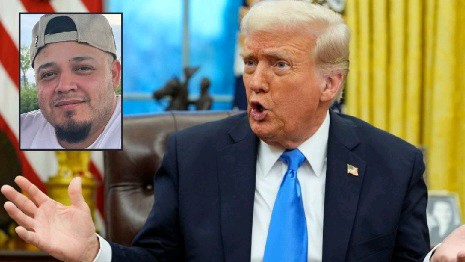
Judge Pulls Plug on Criminal Trial for Abrego Garcia, Grants Feds One Last Chance
U.S. District Judge Waverly Crenshaw Jr. has abruptly canceled the scheduled January 2026 trial for Kilmar Armando Abrego Garcia, a Maryland father facing federal human smuggling charges.
The decision, outlined in a concise yet impactful four-page order issued in late December 2025, replaces the full trial with a focused one-day evidentiary hearing set for January 28, 2026.
This hearing will center exclusively on a critical constitutional question: whether the Trump administration’s prosecution of Abrego Garcia is driven by vindictiveness and selective enforcement, potentially in retaliation for his successful legal fight against a wrongful deportation.
For a case already laden with dramatic twists—from a botched removal to El Salvador’s infamous mega-prison to a Supreme Court intervention—this ruling represents a major victory for the defense and a significant hurdle for federal prosecutors, raising profound questions about due process, prosecutorial motives, and the boundaries of immigration enforcement in a politically charged era.
The Story of Kilmar Abrego Garcia: A Family Man Entangled in Immigration Turmoil
The story of Kilmar Armando Abrego Garcia reads like a saga of resilience amid systemic turmoil. A Salvadoran immigrant in his mid-30s, Abrego Garcia has built a life in Prince George’s County, Maryland, as a dedicated sheet metal worker, supporting his U.S. citizen wife, Jennifer Vasquez Sura, and their three young children, all American citizens. Described by family and advocates as a hardworking provider with no prior criminal record in the United States, he held a valid work permit and lived under a 2019 court order that protected him from deportation due to credible fears of persecution in his home country.
Yet, in March 2025, during the early wave of mass deportations under President Trump’s second term, Abrego Garcia was swept up in what the government later conceded was a grave error.
Labeled—controversially and without public evidence—as an MS-13 gang member, he was placed on a flight to El Salvador and confined in the notorious CECOT prison, known internationally for its harsh conditions and allegations of human rights abuses.
What followed was a protracted legal battle that captured national attention. Abrego Garcia’s deportation violated not only his specific withholding-of-removal order but also broader judicial stays on similar removals. His case escalated through multiple courts, culminating in a Supreme Court directive in June 2025 ordering his immediate return to the United States.
Upon his arrival back on American soil, however, the narrative took another sharp turn: Federal authorities promptly charged him with human smuggling offenses stemming from a 2022 traffic stop in Tennessee, where he had been driving a van carrying several passengers suspected of illegal entry.
At the time of the stop, local authorities issued only a warning and released him without charges—a decision that stood unchallenged until after his high-profile deportation ordeal.
From Dormant Allegations to Federal Indictment: Timeline of Controversy
Defense attorneys have long argued that this sudden revival of dormant allegations reeks of retaliation. They point to the timing: Charges materialized only after Abrego Garcia’s court victories embarrassed the administration and exposed flaws in its deportation machinery.
Internal fallout was evident when a Department of Justice lawyer faced disciplinary action for candidly admitting the removal errors in court filings. Public statements from senior officials, including comments by Deputy Attorney General Todd Blanche on national television suggesting the charges were linked to the deportation reversal, further fueled suspicions.
Abrego Garcia himself, after enduring months in Salvadoran custody, was briefly released on bail in the U.S. before being detained again by Immigration and Customs Enforcement (ICE) in September 2025—only to secure release once more in December under a separate Maryland federal order.
Judicial Scrutiny Builds: Establishing a Presumption of Vindictiveness
Judge Crenshaw, presiding over the case in the Middle District of Tennessee and appointed by President Barack Obama, has shown increasing skepticism toward the government’s position.
The path to the current crossroads began in August 2025 when the defense filed a motion to dismiss the indictment, alleging selective and vindictive prosecution in violation of due process rights under the Fifth Amendment.
By October, Crenshaw had already determined there existed a “realistic likelihood of vindictiveness,” a threshold finding that entitled Abrego Garcia to discovery and an evidentiary exploration of the government’s motives. This was no small concession; claims of prosecutorial vindictiveness are notoriously difficult to prove, requiring defendants to first establish a prima facie case that triggers a presumption in their favor.
In his latest order, Crenshaw reaffirmed and strengthened that presumption, noting that Abrego Garcia had long since met the initial burden.
Under the controlling legal framework, this shifts the onus squarely onto the government to provide “objective, on-the-record explanations” for pursuing the charges now, after years of inaction. Failure to rebut the presumption convincingly could result in immediate dismissal of the indictment, without the need for further proceedings or additional discovery sought by the defense.
Conversely, if prosecutors succeed in offering credible, non-pretextual justifications, the burden would revert to Abrego Garcia to demonstrate that those explanations are mere covers for actual retaliatory intent.
The judge’s language underscores the gravity of the upcoming hearing. He explicitly warned that an unrebutted presumption would compel a finding of vindictiveness, leading to dismissal or other remedies.
Yet he also acknowledged the double-edged nature of the current procedural posture: While the defense has argued the existing record already justifies outright dismissal—citing what they describe as overwhelming evidence of improper motive—the hearing provides the government one final opportunity to present live testimony or documentation that might tilt the scales.
Unsealed documents from earlier in December revealed emails and communications involving high-level DOJ officials, including directives from the Deputy Attorney General’s office labeling the case a “top priority” and urging swift action post-deportation. These disclosures, ordered over government objections asserting privilege, have only intensified scrutiny.
What All These Mean?
At its core, this case exposes the rare but potent doctrine of vindictive prosecution, a safeguard against the government punishing individuals for exercising their legal rights. By establishing a prima facie showing and triggering a presumption, Judge Crenshaw has placed the Trump administration in an unusually defensive position—one where prosecutors must affirmatively justify their decisions rather than rely on the broad deference typically afforded to charging choices.
The unsealed communications suggesting centralized involvement from Washington contradict routine claims of localized prosecutorial independence, providing tangible evidence that elevates this beyond mere suspicion.
Politically, the prosecution fits a pattern perceived by critics as retaliatory justice: targeting individuals who successfully resist executive actions, thereby deterring future challenges. The administration’s aggressive deportation campaign, while popular among its base, has faced repeated judicial rebukes for procedural errors and overreach.
Charging Abrego Garcia upon his court-ordered return could be interpreted as an attempt to salvage credibility or punish defiance, raising separation-of-powers concerns. If vindictiveness is found, it would not only invalidate this case but also cast a shadow over similar prosecutions, potentially chilling enforcement efforts.
Constitutionally, the stakes involve fundamental due process protections. Vindictive prosecution claims, rooted in Supreme Court precedents like Blackledge v. Perry, aim to prevent the chilling of appellate or collateral rights. Here, Abrego Garcia’s “success” was invoking judicial oversight against unlawful removal—a core check on executive power.
A ruling in his favor would reinforce that individuals cannot be criminally penalized for winning in court, preserving access to justice amid mass enforcement operations.
Comparatively, such claims seldom succeed due to high evidentiary bars, making Crenshaw’s trajectory notable. The involvement of top DOJ brass, combined with the dormant-to-active timeline, creates a compelling narrative of pretext.
For immigrant communities, the broader chilling effect is profound: Fear of secondary prosecutions could discourage legal challenges to erroneous deportations, even when lives are at stake.
This case transcends the individual circumstances of one immigrant; it has emerged as a broader litmus test for the Trump administration’s immigration agenda.
Critics, including immigrant rights organizations and Democratic lawmakers, view it as emblematic of a willingness to weaponize criminal prosecutions against those who successfully challenge executive actions. Supporters of the administration counter that the charges address legitimate concerns over human smuggling and potential gang affiliations, insisting that enforcement priorities naturally evolve.
HAPPENING NOW
- AG Bondi Snaps After Brennan’s Lawyers Try to Keep Cannon Off Grand Jury Case
- Judge Rips Trump Admin Over ‘Unclear’ Medicaid Data Sharing With ICE
- Trump Admin’s WISeR Pilot Targets ‘Waste’ with Prior Authorization—But at What Cost to Seniors?
Public reaction has been deeply divided, with mainstream media outlets emphasizing the vindictiveness allegations and human toll on Abrego Garcia’s family, while conservative commentators frame the prosecution as essential accountability in the fight against illegal immigration and transnational crime.
As the January 28 hearing approaches, stakes could hardly be higher. Prosecutors will likely present testimony from investigators and officials to establish that the smuggling charges stem from independent evidence, untainted by the deportation controversy.
The defense, armed with the current presumption and prior disclosures, will aim to expose any inconsistencies or underlying motives. Whatever the outcome, the decision will ripple outward: A government victory could embolden similar prosecutions, while a defense triumph might deter retaliatory actions and reinforce constitutional protections in immigration-related cases.
For Kilmar Abrego Garcia and his family, the wait continues under the shadow of uncertainty. Having already endured wrongful exile and separation, they now pin hopes on a single day’s proceedings that could determine whether he faces years in prison or full exoneration.


