Judge Accused of ‘Unhinged’ Tirades Against Clerks
In the hallowed halls of the federal judiciary, where justice is supposed to be blind and impartial, a disturbing pattern of workplace mistreatment has come under scrutiny.
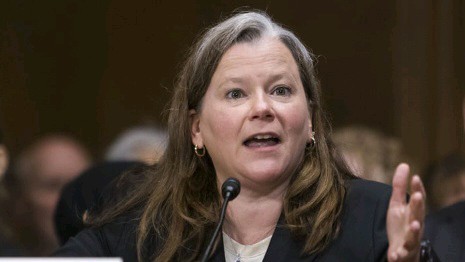
At the center of a recent storm is U.S. Circuit Judge Sarah A.L. Merriam, a 2022 appointee by President Joe Biden to the U.S. Court of Appeals for the 2nd Circuit. A nonprofit organization dedicated to protecting judicial employees has filed a formal complaint accusing her of bullying and berating law clerks, marking what could be a watershed moment in addressing systemic abuse within the courts.
This isn’t just an isolated incident; it highlights deep-seated issues in how the judiciary self-regulates, the vulnerabilities of young legal professionals, and the urgent need for reform. We’ll explore the details of the allegations, historical context, expert insights, and potential ramifications for the legal system at large.
Who Is Judge Sarah A.L. Merriam?
Sarah A.L. Merriam, now 52, has built a distinguished career in the legal field, rising from a federal prosecutor in Connecticut to a U.S. District Judge before her elevation to the appellate bench.
Nominated by President Biden in 2021 and confirmed by the Senate in 2022, Merriam was praised for her sharp intellect, prosecutorial experience, and commitment to public service. Her background includes handling complex cases involving white-collar crime, civil rights, and national security during her time as a U.S. Attorney’s Office prosecutor and later as a magistrate judge.
However, beneath this professional veneer, reports paint a different picture. Former associates and clerks from her time in Connecticut have described her as having a “quick temper and combative nature,” with allegations of intimidation and humiliation surfacing in anonymous reviews and now formal complaints.
This duality—accomplished jurist versus alleged workplace tyrant raises questions about how personal demeanor intersects with judicial authority. In a profession where judges wield immense power, such traits can amplify into toxic environments, especially for entry-level clerks who are often recent law school graduates in their first real jobs.
Merriam’s appointment was part of Biden’s push for diversity on the bench; as a woman with a background in public defense and prosecution, she represented a balanced perspective. Yet, these mistreatment claims challenge the narrative of progressive judicial reform, prompting analysis on whether vetting processes adequately screen for interpersonal skills alongside legal acumen.
The 2022 Complaint and the 2023 Judicial Inquiry: A First Warning Ignored?
The controversy traces back to October 2022, when an anonymous law clerk filed a complaint under the Judicial Conduct and Disability Act, alleging “abusive and harassing conduct” in Merriam’s chambers. This triggered an investigation led by Chief Judge Debra Ann Livingston, a George W. Bush appointee known for her measured approach to judicial oversight.
Livingston’s inquiry involved interviews with current and former staff, revealing a consensus that while clerks “learned a lot” from Merriam, her “management style could be overly harsh.”
The December 2023 ruling concluded the workplace issues with “voluntary corrective action,” implying Merriam agreed to changes without formal sanctions. Ethical claims in the complaint were dismissed outright, a decision that critics argue set a low bar for accountability.
This outcome is emblematic of the judiciary’s self-policing model, where chief judges handle complaints internally. Insights from legal scholars suggest this system often prioritizes judicial independence over employee welfare, leading to underreporting.
In Merriam’s case, the “voluntary” resolution may have been seen as sufficient at the time, but subsequent allegations indicate it failed to effect lasting change, underscoring the limitations of informal remedies in high-power dynamics.
The Latest Bombshell: LAP’s December 2025 Complaint and Shocking Details
Fast-forward to December 2025, and the Legal Accountability Project (LAP), a nonprofit founded to advocate for mistreated judicial employees, has stepped in with a new misconduct complaint. Based on “troubling corroborated information from several former clerks,” LAP alleges Merriam’s behavior persists, including yelling, berating staff, and sending “all-caps unhinged emails.”
Aliza Shatzman, LAP’s president and a former clerk who experienced mistreatment herself, described Merriam as “a bully in all the ways one might bully their employees.” LAP positions this as unprecedented: the first public reprimand for clerk mistreatment followed by a second complaint for ongoing violations of workplace policies.
Why now? LAP argues that individual clerks fear retaliation—blacklisting, poor references, or career sabotage in a field where judicial clerkships are golden tickets to prestigious jobs. By filing collectively, LAP provides “strength in numbers,” amplifying voices that might otherwise remain silent. This strategy draws parallels to #MeToo movements in other sectors, where anonymous aggregation exposes patterns of abuse.
Shocking Statistics from Judicial Workplace Surveys
LAP’s action doesn’t occur in a vacuum. The federal judiciary’s 2023 workplace climate survey revealed alarming figures: 106 judges (about 1 in 17) were accused of mistreating clerks that year, based on anonymous responses. Yet, only three formal complaints were filed, highlighting a massive gap between incidents and accountability.
Analysis of these stats suggests systemic barriers: Law clerks, typically on one-year terms, depend on judges for recommendations, creating a power imbalance ripe for exploitation.
A 2024 follow-up survey might show similar trends, but without public data, it’s hard to gauge progress. Experts like Professor Arthur Hellman from the University of Pittsburgh School of Law note that while the judiciary has introduced anti-harassment training post-#MeToo, enforcement remains inconsistent.
Comparatively, other professions offer Title VII protections under the Civil Rights Act, shielding employees from discrimination and harassment. Judicial employees lack these, a loophole LAP criticizes as archaic. Extending such rights could empower clerks, but it risks infringing on judicial autonomy—a debate that’s gained traction in Congress.
Public Reactions – From Outrage to Calls for Reform
The story has ignited discussions across media outlets, with NPR, Reuters, and Law.com detailing the allegations and their implications. Public sentiment, as gleaned from online forums and legal blogs, ranges from shock to demands for Merriam’s removal. Some defend her, citing the stresses of appellate work, but most condemn the behavior as unbecoming of a federal judge.
On social media, hashtags like #JudicialAccountability have trended, with former clerks sharing anonymized stories. This echoes earlier scandals, such as those involving Judge Alex Kozinski in 2017, who resigned amid harassment claims. The Merriam case could catalyze similar outcomes, pressuring the 2nd Circuit to act decisively.
At its core, this scandal exposes the judiciary’s inadequate self-regulation. Voluntary corrective actions, while well-intentioned, lack teeth; without monitoring, recidivism is likely. Psychological insights reveal how high-stress environments foster bullying—judges, under caseload pressures, may displace frustrations onto staff.
Politically, as a Biden appointee, Merriam’s troubles could fuel partisan narratives about judicial vetting. Conservatives might point to it as evidence of lax standards, while progressives advocate for stronger worker protections. Broader reforms proposed include independent oversight boards, mandatory reporting, and extending employment laws to clerks.
HAPPENING NOW
- Babson College Freshman Captured by ICE Goons at Boston Airport and Deported
- RFK Jr Links Circumcision, Tylenol to Autism as Experts Slam Alarmism
- Joe Kennedy III Demands His Uncle RFK Jr Resign Immediately
LAP’s role is pivotal: By aggregating complaints, they mitigate individual risks, potentially encouraging more whistleblowers. However, challenges remain—proving allegations without public trials is tough, and judicial immunity shields judges from lawsuits.
As the 2nd Circuit reviews LAP’s complaint, outcomes could range from dismissal to suspension or referral to Congress for impeachment. For Merriam, reputational damage is already evident; for clerks, this could mark a turning point toward safer workplaces.
Ultimately, this story isn’t just about one judge—it’s a call to action for systemic change. Ensuring positive clerkship experiences isn’t optional; it’s essential for nurturing the next generation of legal minds. As Shatzman puts it, shielding judges from accountability would “stain the judiciary.”
Stay informed on developments, and consider supporting organizations like LAP in their fight for justice behind the bench.
What are your thoughts on judicial reforms? Share in the comments.